“IMPERIUM” – Interior Perspective
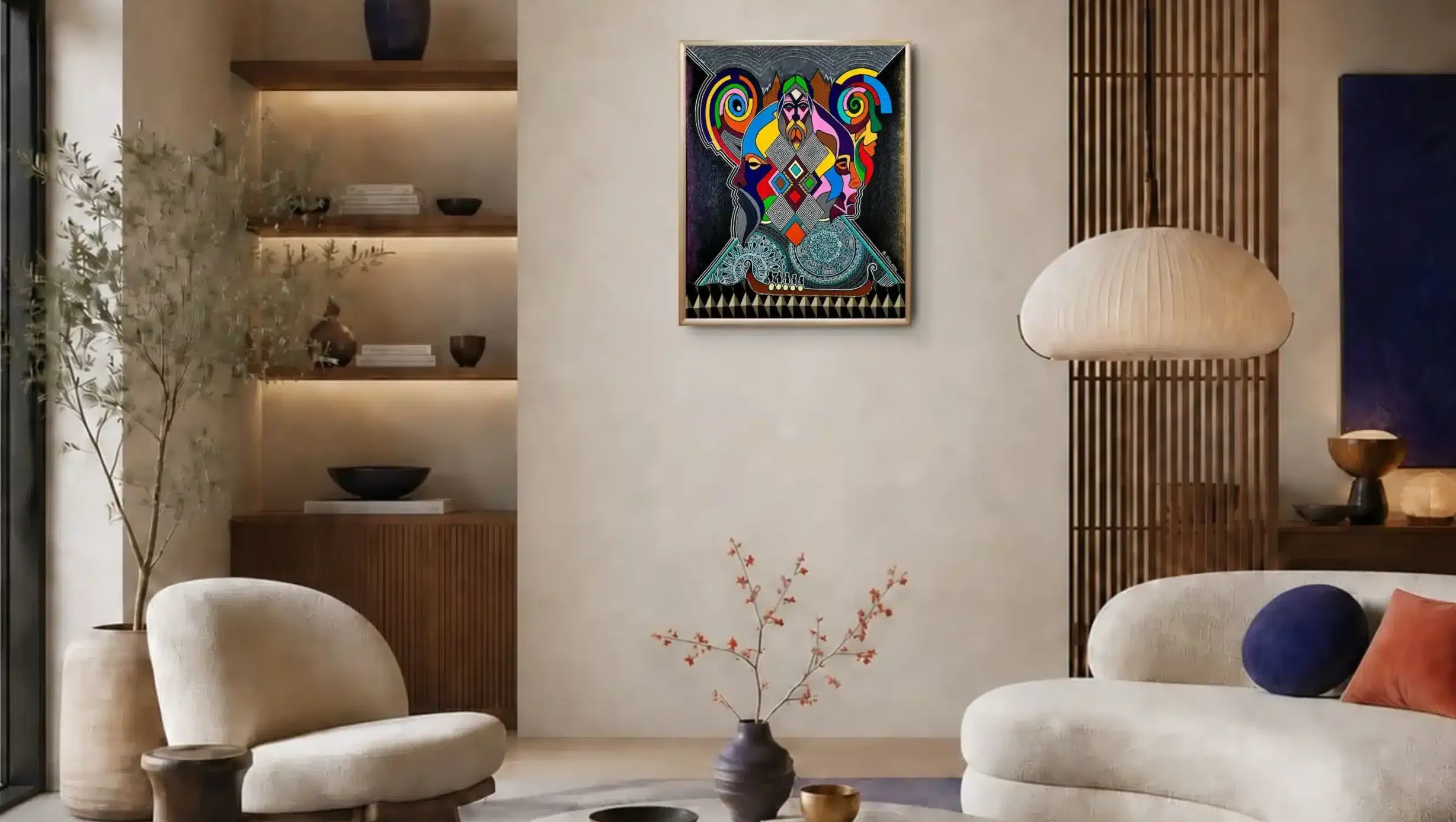
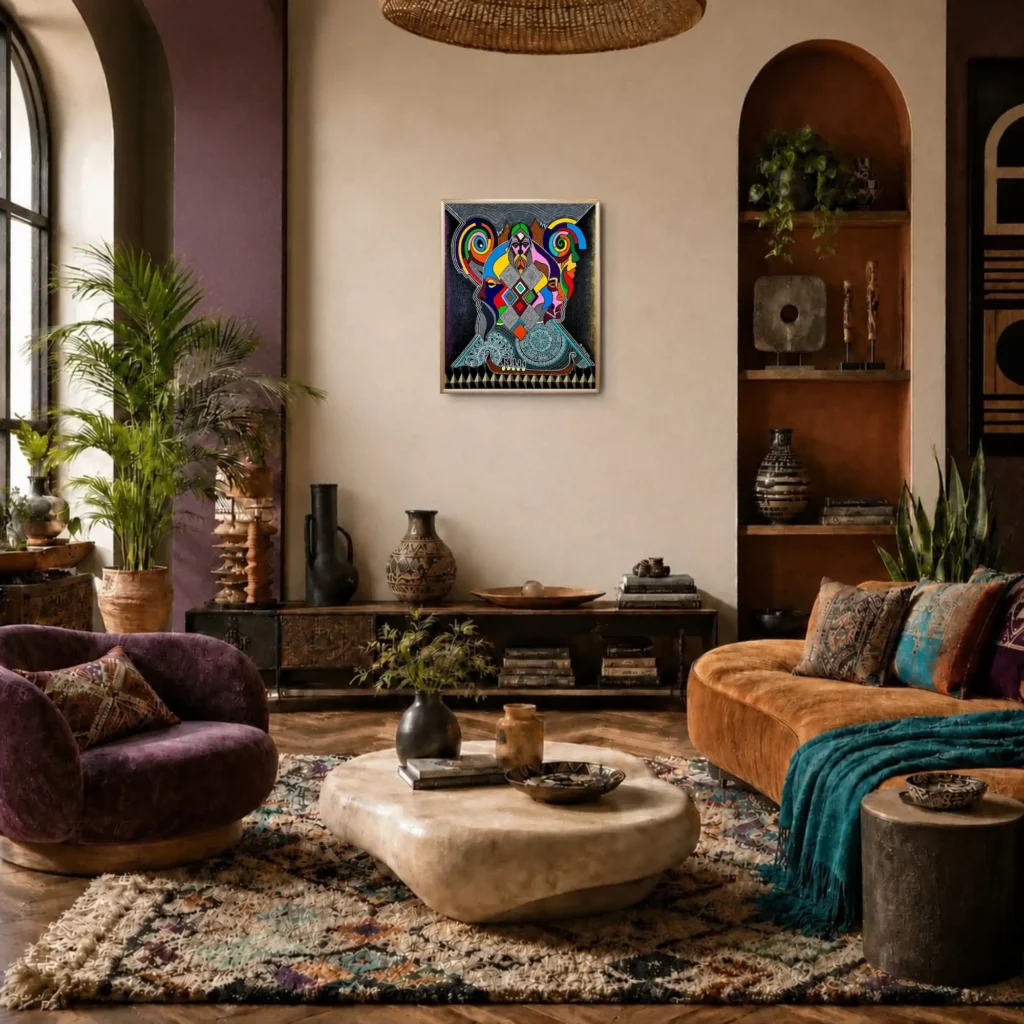
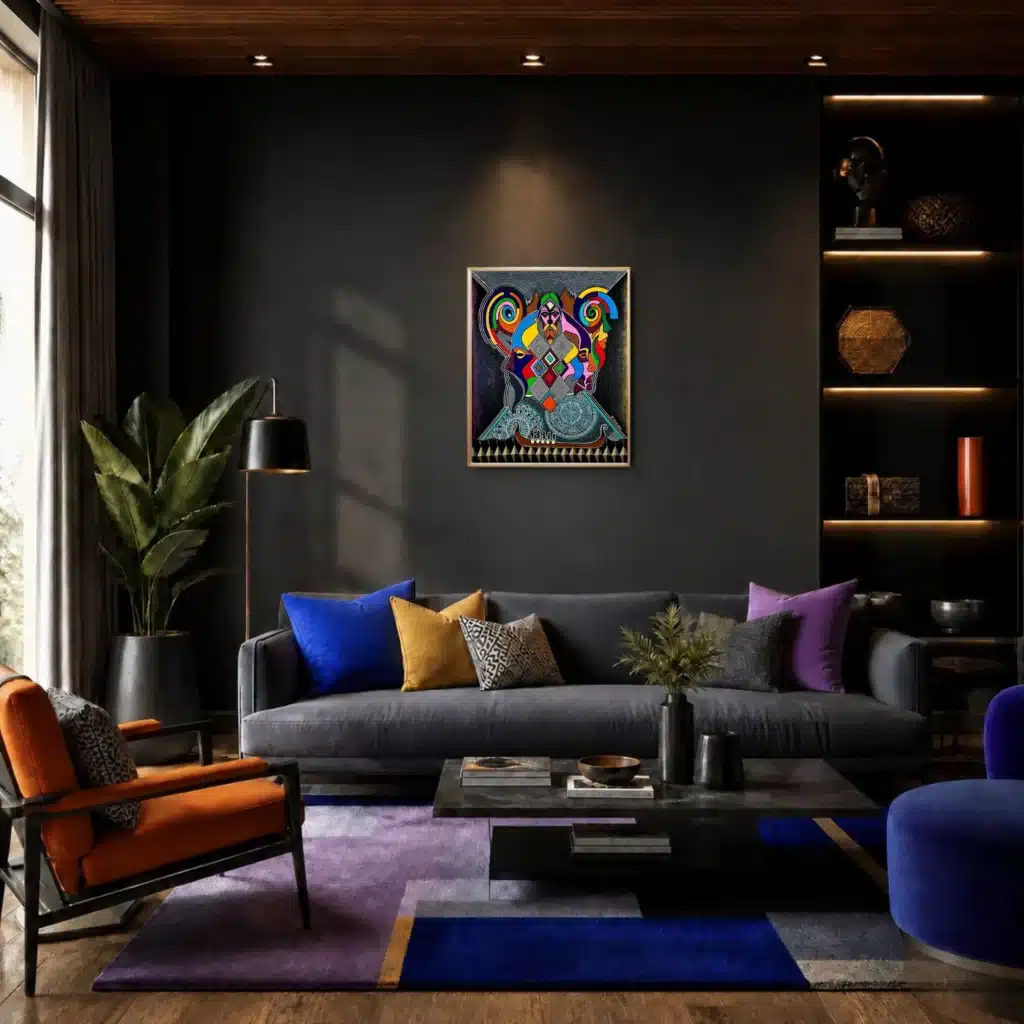
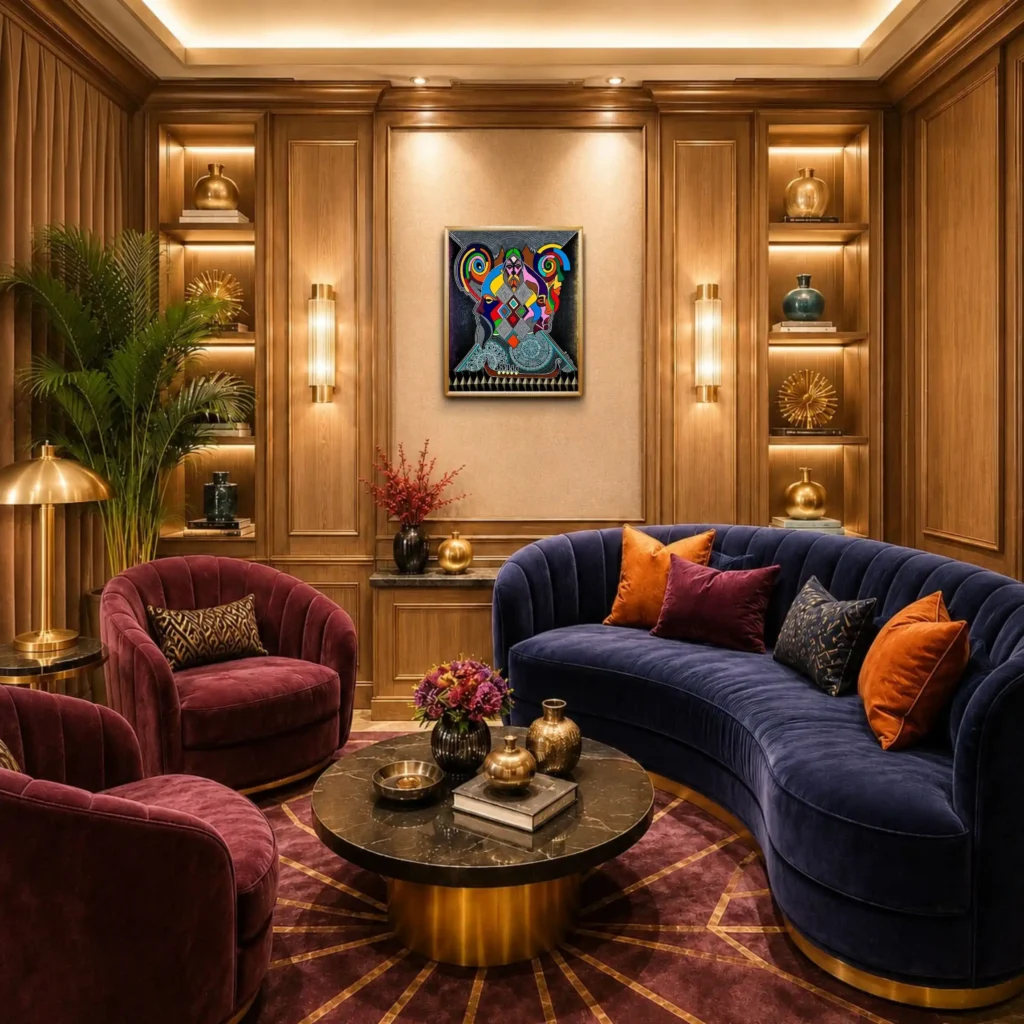
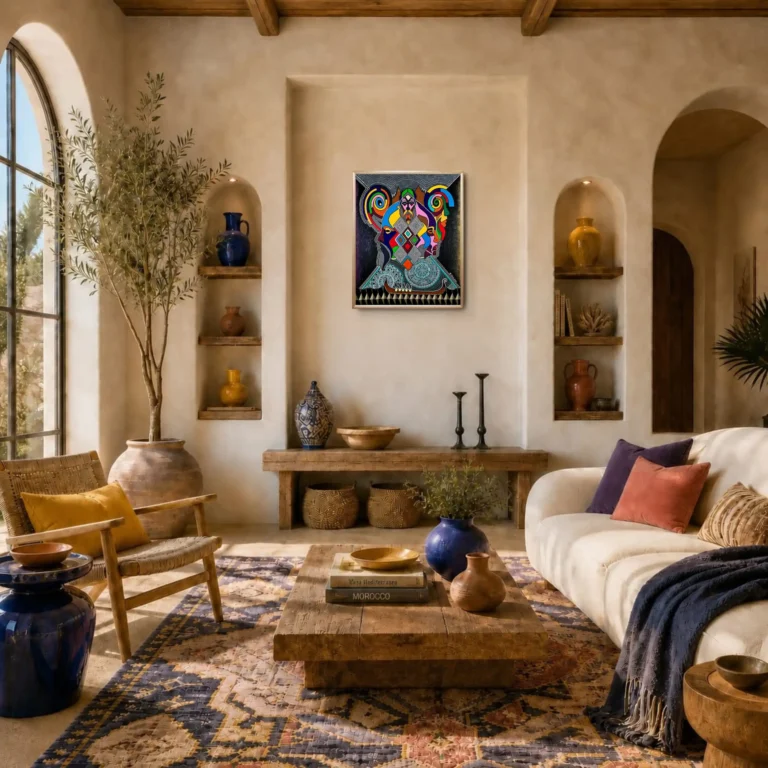
A painting never enters a neutral space. Every interior already carries its own rhythm, shaped by light, materials, proportions and the objects that inhabit it. When the painting is placed within these different surroundings, it does more than occupy the wall. It changes the balance of the room and creates a new point around which the space begins to gather.
The composition has a strong frontal presence. Its central figure appears to meet the viewer directly, while the symmetry creates a sense of stability and control. Around it, spirals, geometric forms and fine ornamental lines introduce movement. The painting holds order and instinct in tension, allowing it to feel powerful without becoming rigid.
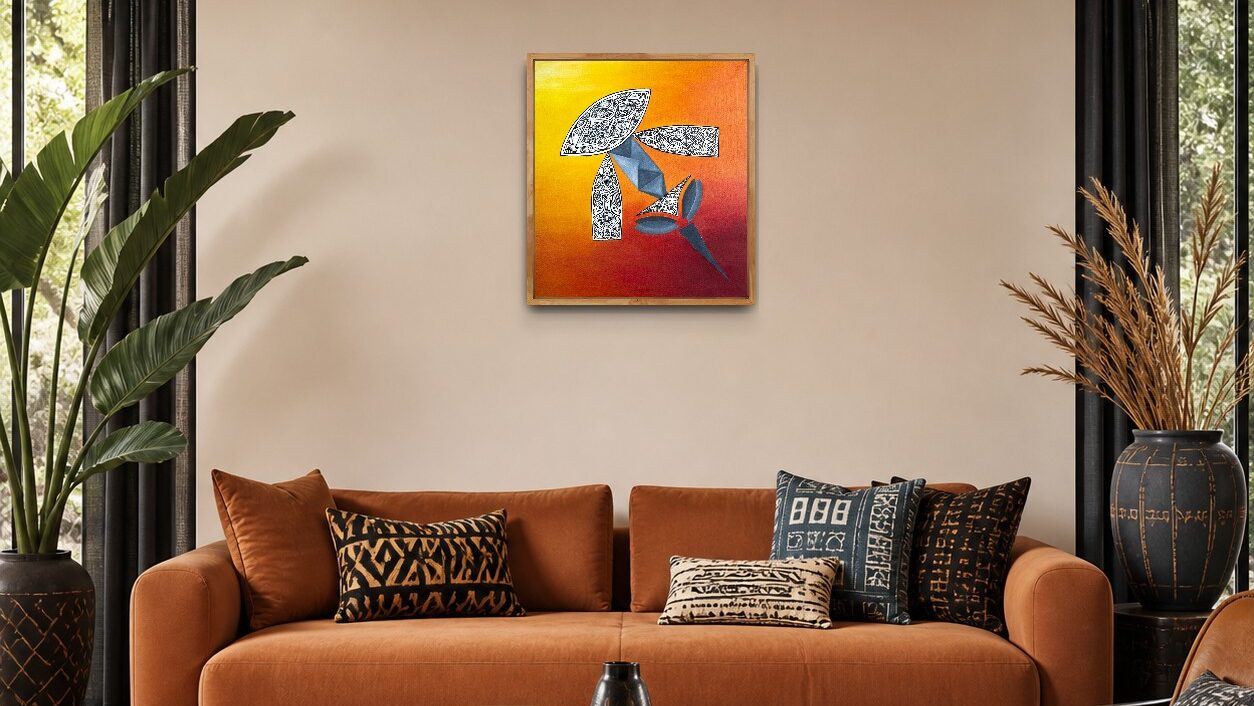
Depending on the surrounding light and materials, IMPERIUM can shift from ceremonial and mysterious to graphic and almost emblematic. Dark wood, velvet and brass deepen its dramatic character, while pale walls and quieter forms reveal the clarity of its silhouette and the tension within its symmetry. The image itself remains unchanged, yet the atmosphere around it determines which aspect of its personality comes to the fore.
The relationship is not built through color alone. Rounded furniture begins to echo the curved forms inside the composition, while vertical architectural lines strengthen its central axis. Textiles, ceramics, carved objects and natural surfaces connect with the hand-drawn quality of the smaller details. These visual links are subtle, but they allow the painting and the interior to feel connected without appearing deliberately matched.
The amount of space around the artwork also changes the way it is experienced. Within a richly layered room, this painting becomes part of a wider conversation between pattern, texture and collected objects. Its internal structure keeps it from disappearing among them. In quieter surroundings, the painting becomes more concentrated. The empty wall does not weaken its presence, it gives the artwork room to expand beyond its physical dimensions.
At the same time, the influence moves in the opposite direction. Once IMPERIUM enters the room, surrounding elements begin to appear differently. A curved sofa becomes more sculptural, a wooden panel more architectural, and a small accent of blue or orange suddenly feels intentional. The painting does not merely adapt to the interior. It reorganizes the way the interior is seen.
For me, this is where the work becomes most interesting. It can belong to a refined space without becoming decorative, exist among earthy materials without losing its intensity, and bring energy into a restrained room without disturbing its calm. It doesn’t require its surroundings to echo its visual language. Often, contrast creates the most convincing connection.
IMPERIUM establishes a territory of its own wherever it is placed.
Sometimes it feels like an artifact, sometimes like a contemporary symbol, and sometimes like a concentrated source of color and movement. The room gives the painting a different voice, but the painting also leaves the room subtly transformed.
Related posts
“PURGATO” – Interior Perspective
Layer upon layer, each one earned. Nothing here arrived by accident.
“ITER” – Interior Perspective
A journey built from contrast. What the hand constructs, the eye must learn to read.
“VOLUBILIS” – Interior Perspective
It carries the warmth of late afternoon into the room. It shifts between modern, bohemian, and drama